Beijing Recognition Lifts Fire Robot Export Readiness
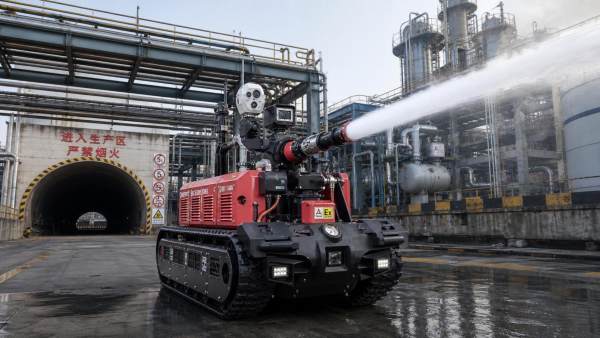
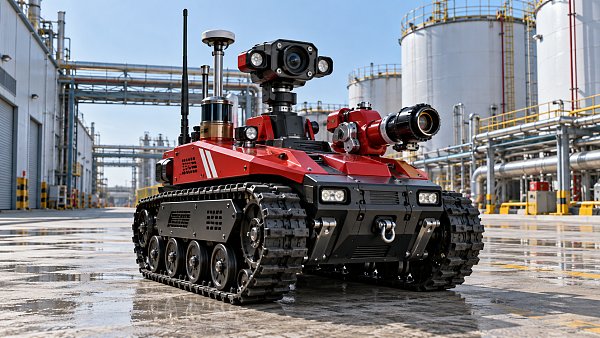
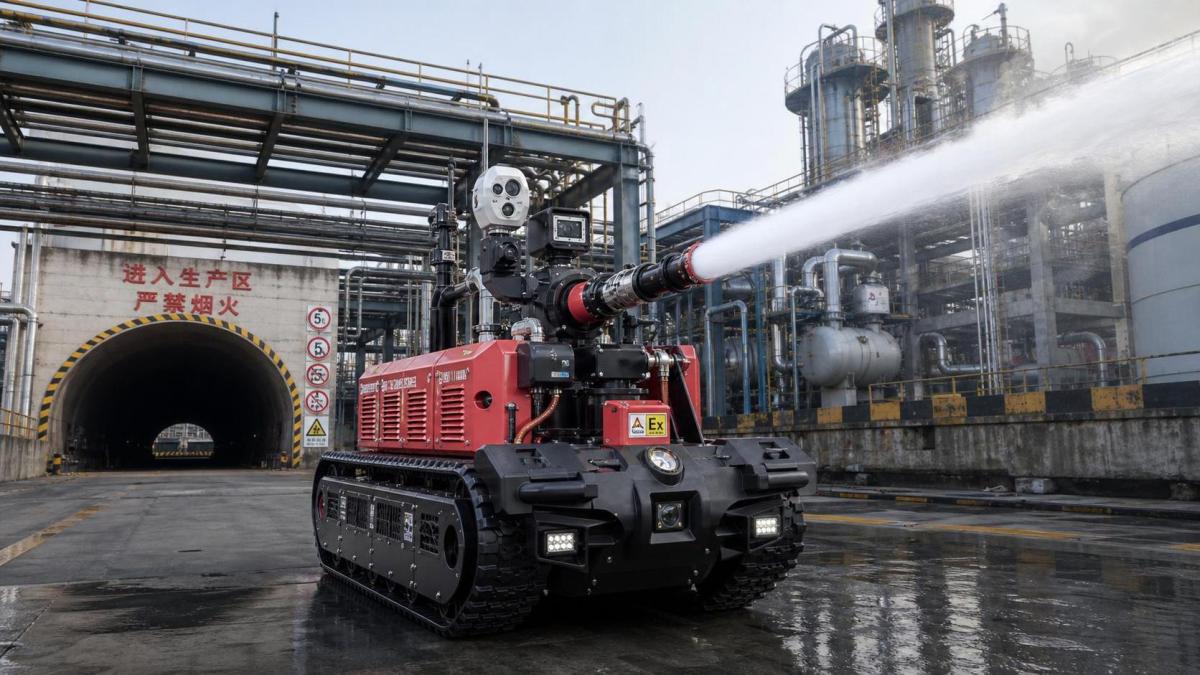
On May 29, 2026, a high-temperature, explosion-proof firefighting and reconnaissance robot from Beijing Lingtian Intelligent Equipment Group was included in Beijing’s first batch of major technical equipment recognized as a first-of-its-kind product. For companies involved in hazardous-environment robotics, industrial emergency response, export sales, and cross-border procurement, the development is worth watching because it combines domestic recognition with existing ATEX Zone 1, IECEx, and GB 3836 certification credentials, strengthening how this type of ATV firefighting robot may be evaluated in international tenders.
What the announcement confirms
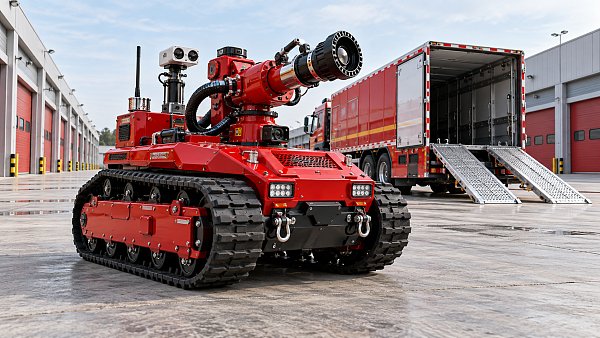
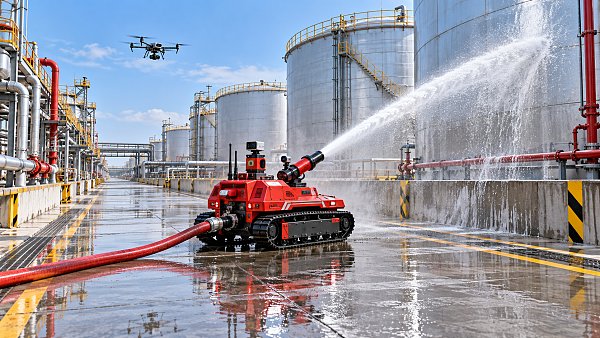
The confirmed facts are limited but commercially relevant. The product named in the announcement is a high-temperature, explosion-proof firefighting and extinguishing reconnaissance robot developed by Beijing Lingtian Intelligent Equipment Group. On May 29, 2026, it was selected for Beijing’s first batch of the catalogue for first-of-its-kind major technical equipment.
The available information also confirms that the robot has passed ATEX Zone 1, IECEx, and GB 3836 explosion-proof certification. Its stated application scenarios include petrochemical sites, tunnels, and underground spaces. The same information indicates that the first-of-its-kind recognition strengthens the product’s qualification backing for international bidding, especially in procurement assessment for intrinsically safe ATV firefighting robots in the Middle East, Southeast Asia, and Latin America.
Why different market participants may pay attention
Export and tender-facing suppliers may reassess qualification positioning
From an industry perspective, suppliers selling into overseas industrial safety and emergency-response projects may pay attention because recognition of this kind can affect how qualification documents are presented in pre-bid and bid-review stages. The practical impact is likely to appear in technical submission packages, compliance narratives, and customer-facing proof of product maturity rather than in immediate shipment outcomes.
Industrial end users may focus on risk-scene suitability
Buyers in petrochemical, tunnel, and underground-space operations may pay attention because the confirmed certifications and stated use cases align with high-risk operating environments. What deserves closer attention is whether procurement teams begin placing greater weight on combined proof that covers both explosion protection standards and recognized equipment status when screening firefighting robot options.
Channel and service partners may need clearer documentation workflows
Distributors, local partners, and service providers in overseas markets may also be affected at the business-process level. The reason is straightforward: procurement assessment for high-risk equipment often depends not only on product claims but also on whether certification, qualification language, and bidding documents are organized in a way that local customers can evaluate efficiently.
What companies should monitor next
Watch for how the recognition is referenced in official and commercial documents
Analysis shows that one key point is not only the recognition itself, but how it is subsequently described in catalogues, tender materials, product dossiers, and client communications. Companies following this segment should distinguish between confirmed official wording and broader market interpretation.
Keep certification and bidding materials aligned by target market
For firms targeting the Middle East, Southeast Asia, and Latin America, closer attention should go to how ATEX Zone 1, IECEx, GB 3836, and first-of-its-kind recognition are assembled into a consistent export compliance package. The issue is less about adding claims and more about ensuring that existing credentials are presented clearly for procurement review.
Prepare for longer customer due diligence in hazardous applications
Observably, products intended for petrochemical sites, tunnels, and underground spaces are likely to face detailed scrutiny around applicability and qualification evidence. Companies in this space should pay attention to document readiness, response speed for buyer questions, and communication around certified scope, without assuming that recognition alone resolves all procurement concerns.
Separate policy signal from immediate order conversion
What deserves closer attention is the difference between stronger qualification backing and confirmed commercial results. The information provided supports the view that export readiness is improving, but it does not by itself confirm transaction volume, project wins, or adoption pace in any overseas market.
How this news is best understood at this stage
As an editorial observation, this development is better understood as a meaningful market signal rather than a completed competitive outcome. The combination of municipal first-of-its-kind recognition and already obtained explosion-proof certifications points to a more mature compliance story for hazardous-environment firefighting robotics. At the same time, the available information does not establish how quickly this will translate into procurement decisions or repeat orders.
Analysis also suggests that the most relevant takeaway is not limited to one company. The update highlights how domestic recognition and internationally referenced certification can work together in export-facing industrial equipment categories where buyers must evaluate both safety suitability and supplier credibility.
A cautious takeaway for the sector
For the industry, the immediate significance lies in qualification strength, not in a verified market outcome. It is more appropriate to understand this news as an indicator that compliance-backed firefighting robots for hazardous environments may gain stronger visibility in cross-border procurement discussions, especially where intrinsically safe ATV platforms are under review. Whether that visibility converts into wider commercial traction still requires continued observation.
Basis of this article
This article is based on the user-provided news title, event date, and event summary. Typical source categories for this kind of development may include official announcements, company disclosures, industry association information, authoritative media reports, and standards-related documents. No specific official source link was provided in the input, so the exact primary-source reference still requires ongoing verification. Follow-up attention should remain on any later official wording, tender use of the recognition, and market-specific compliance communication tied to export activity.
Related Intelligence
 B2G Capital & Fleet TCOOct 27, 2026How a fire apparatus engineering company can lower fleet lifecycle costsSee how a fire apparatus engineering company can lower fleet lifecycle costs through smarter specifications, easier maintenance, and reliable support—without compromising readiness.
 ATV Firefighting RobotsOct 27, 2026Helenzhe’s Grumman Wins Firefighting Robot Order Worth Over RMB 10 Million in YichangFirefighting robots lead Shanghai Grumman’s RMB 10 million-plus Yichang order. Explore Helenzhe’s emergency rescue equipment win, including transport vehicles and quadruped robots.
 100m Aerial Ladder PlatformsOct 26, 2026How much does a 100m aerial platform for high-rise rescue cost?Explore high-rise rescue price factors for a 100m aerial platform. Compare equipment, compliance, and lifetime costs to build a smarter budget before requesting quotes.
 Aramid/PBI Turnout GearOct 26, 2026Hunan Highlights Digital Upgrades and Overseas Reach in Safety and Emergency EquipmentExplore Hunan’s safety and emergency equipment upgrades, overseas communications applications and protective equipment markets—and discover key insights for industrial buyers.
 ARFF Airport Crash TendersOct 25, 2026How FAA rules affect airport crash tender capacity in the USAAirport crash tenders USA: Discover how FAA rules shape fleet size, agent capacity and response times—and what to check before choosing your next ARFF vehicle.
 B2G Capital & Fleet TCOOct 25, 2026South Korea’s Fire Budget Structure and Local Police Agency Reform Draw ScrutinyExplore South Korea’s firefighting budget debate and local police agency reform, with insights on funding pressures, equipment procurement and what public-sector suppliers should watch.
 Aramid/PBI Turnout GearOct 24, 2026Does repeated washing reduce the flame resistance of Nomex fabric?Nomex fabric for flame resistance retains its inherent properties through proper washing. Discover essential care tips and inspection checks to help keep protective clothing serviceable.
 ATV Firefighting RobotsOct 24, 2026Beijing Development Area Special Equipment Drill Features Firefighting Reconnaissance RobotFirefighting reconnaissance robot joins Beijing's 2026 special equipment emergency drill. Explore key takeaways for rescue readiness, equipment evaluation and smarter procurement.
 NFPA/EN Regs & ATEX CertsOct 23, 2026When is VdS approval needed for industrial fire suppression in Germany?Industrial fire suppression Germany: Find out when VdS approval is required, what insurers expect, and which certificates to verify before buying. Avoid costly procurement mistakes.
 High-flow Centrifugal Fire PumpsOct 23, 2026Alexis Fire Equipment Names Dinges Fire as New Dealer for Six Midwest StatesAlexis Fire Equipment names Dinges Fire Company as its dealer across six Midwest states. Discover what this expansion could mean for fire pumper purchasing and service support.
 UWB Radar Life DetectorsOct 22, 2026How advanced rescue detection technology locates people under rubbleDiscover how advanced rescue detection technology uses UWB radar, acoustic sensors, and cameras to locate people under rubble—and what affects accuracy in real rescue conditions.
 ATV Firefighting RobotsOct 22, 2026NDRC and Five Other Bodies Launch First Major Use Cases With Unmanned FirefightingUnmanned firefighting joins NDRC-backed landmark projects. Explore how robots, drones and smart dispatch could shape procurement for hazardous chemical storage tank areas.
 Aramid/PBI Turnout GearOct 21, 2026How fabric weight affects cut resistance in Kevlar turnout fabricsCompare Kevlar fabric for cut resistance beyond weight alone. Discover how weave, yarns, and test results guide smarter turnout fabric choices without unnecessary bulk.