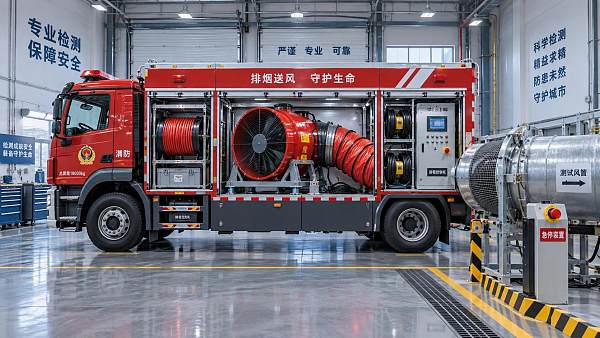
Unmanned Rescue Vehicle Selection: Mobility, Payload, and Safety
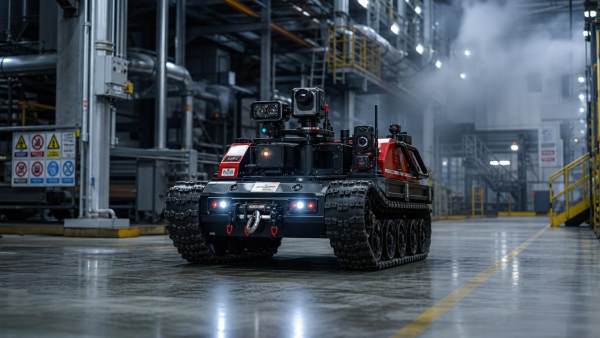
Selecting an unmanned rescue vehicle is no longer a niche decision limited to advanced robotic programs. In fire, collapse, hazardous material, and industrial emergency operations, the platform must move where crews cannot, carry what the mission demands, and reduce exposure without creating new risks.
That is why mobility, payload, and safety deserve to be reviewed together. A strong specification sheet means little if a vehicle stalls on loose debris, loses stability under equipment load, or cannot maintain secure control in smoke, heat, or explosive atmospheres.
Across the ERFS knowledge landscape, this topic connects directly with firefighting robots, remote-control systems, thermal imaging, UWB detection tools, foam delivery, and compliance planning. The right evaluation framework supports both operational readiness and long-term procurement confidence.
Why unmanned rescue vehicle selection has become more strategic
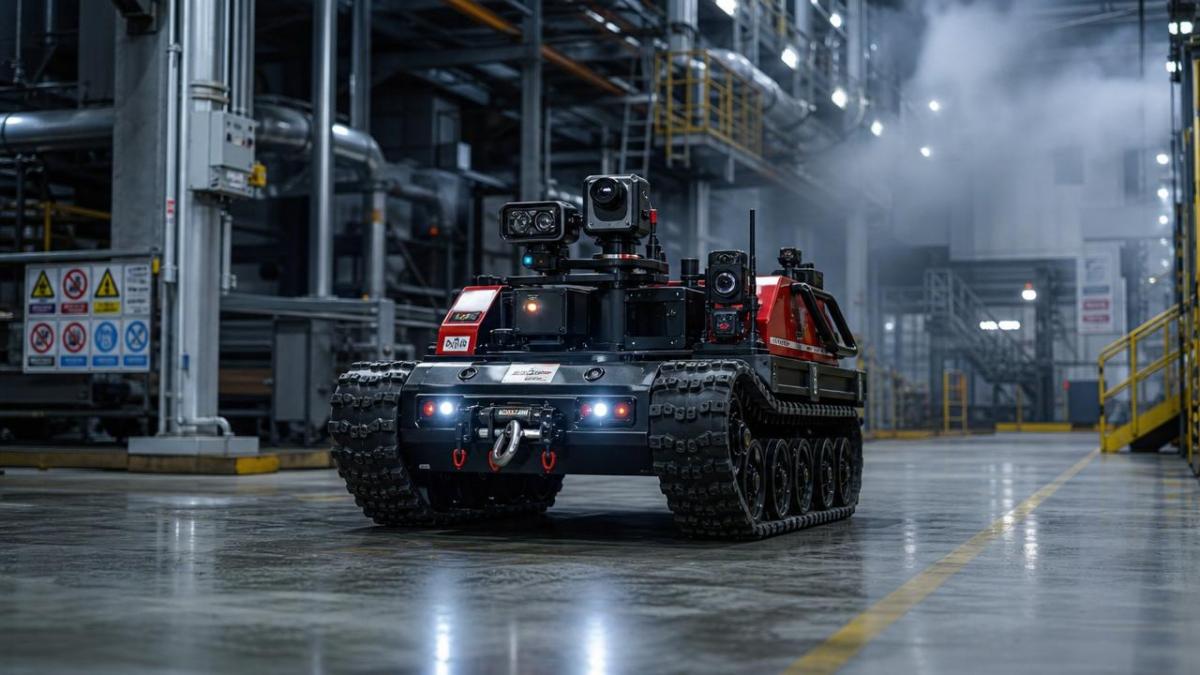
Emergency fleets are being asked to do more in harsher conditions. Urban collapse zones, petrochemical fires, tunnel incidents, airport response areas, and storm-damaged infrastructure all introduce unstable surfaces and restricted human access.
In these settings, an unmanned rescue vehicle is not simply a remote-controlled carrier. It can be a transport node, sensor platform, fire support unit, search aid, or equipment mule that extends reach into high-risk space.
More attention is also coming from lifecycle economics. A platform that protects personnel but requires constant repair, limited battery endurance, or incompatible attachments may weaken the expected return on investment.
The strategic question is practical: can the vehicle perform reliably across real incident conditions while fitting maintenance budgets, control architecture, and compliance expectations?
The core selection lens: mobility, payload, and safety together
Many procurement reviews separate chassis performance from mission equipment. In practice, these factors interact constantly. A vehicle with high nominal payload may lose gradeability, traction, and steering precision once loaded.
Likewise, excellent mobility is less useful if the platform cannot support a water monitor, debris tools, medical supplies, cameras, gas sensors, or communication relay devices needed on scene.
Safety closes the loop. The better the platform handles terrain, load balance, and control integrity, the more effectively it reduces human exposure in hot zones, toxic areas, confined spaces, or post-explosion environments.
Mobility is more than speed
For an unmanned rescue vehicle, mobility should be judged by terrain adaptation rather than top speed. Rubble, mud, broken pavement, stairs, slopes, pooled liquids, and steel grating produce very different traction demands.
Tracked systems often perform better on debris and soft ground. Wheeled systems may offer easier maintenance, faster transit, and lower energy use on firm surfaces. Neither layout is universally better.
Important questions include obstacle height, side-slope stability, turning radius, approach angle, ground clearance, and whether the platform keeps traction while carrying operational loads.
Payload should reflect the real mission package
Payload ratings are often quoted as static maximums. Real missions involve dynamic loading, shock, hose drag, tool mounting, battery weight, mast systems, and sometimes casualty extraction equipment.
A useful review starts with the actual payload package. That may include thermal cameras, foam nozzles, SAR sensors, UWB detectors, rope gear, stretchers, lighting, loudspeakers, or manipulator arms.
What matters is not only total weight. Center of gravity, power draw, attachment compatibility, and quick reconfiguration can influence operational value more than the raw capacity number.
Safety includes the machine, the operator, and the scene
An unmanned rescue vehicle is usually chosen to reduce risk to personnel. That promise depends on stable communications, fail-safe control behavior, emergency stop functions, thermal resilience, and predictable braking under load.
In industrial fire and petrochemical response, safety may also include ATEX-related suitability, shielding against ignition sources, and component protection in explosive or corrosive environments.
Operator visibility matters as well. Camera placement, low-latency transmission, night capability, and integration with thermal imaging can be decisive when dust, smoke, steam, or poor lighting restrict line of sight.
Typical operating scenarios shape the right specification
Selection improves when the vehicle is matched to a scenario set instead of a generic checklist. Different missions favor different chassis, endurance levels, and integration requirements.
This scenario-based view is especially useful on platforms like ERFS, where vehicle selection often overlaps with foam systems, thermal cameras, life detection devices, and remote command architecture.
What deserves closer scrutiny during evaluation
A brochure rarely shows the details that shape field performance. The most relevant gaps often appear in endurance, interface design, and supportability after delivery.
- Check endurance with mission payload attached, not empty-platform runtime.
- Review recovery options if the vehicle loses traction, power, or signal.
- Confirm ingress protection, heat resistance, and cable routing under harsh conditions.
- Assess control latency, video delay, and behavior in cluttered radio environments.
- Verify spare parts access, firmware support, and training depth.
- Ask for evidence from comparable deployments, not only factory demonstrations.
Another important point is interoperability. An unmanned rescue vehicle may need to work alongside drones, fire pumps, foam proportioning systems, smart helmets, or incident command software.
If interfaces are closed or poorly documented, later expansion becomes expensive. A platform that supports modular payloads and standard communication pathways usually protects future flexibility.
Balancing compliance, ROI, and operational realism
Cost comparison alone can distort the decision. The lower-price option may require more frequent maintenance, extra batteries, specialized attachments, or third-party retrofits to reach the expected mission profile.
A better approach is to compare lifecycle impact. That includes service intervals, consumables, software updates, operator training, transport requirements, and expected reliability in high-stress deployments.
Compliance should be reviewed in the same way. Depending on the environment, relevant evidence may involve electrical safety, fire performance, ingress protection, hazardous-area suitability, or local procurement standards.
This is where technical intelligence matters. ERFS-style evaluation links machinery performance to emergency use cases, safety standards, and procurement language, making supplier comparison more disciplined and less reactive.
A practical way to narrow the shortlist
Before moving to formal comparison, it helps to build a weighted scorecard around the real operating environment. That keeps impressive but irrelevant features from dominating the decision.
Useful decision categories
- Terrain profile: rubble, stairs, mud, steel decking, slope, confined access.
- Mission load: sensors, tools, hose equipment, medical cargo, manipulator systems.
- Control resilience: range, latency, signal stability, fail-safe response.
- Environmental stress: heat, water, dust, chemicals, explosive atmosphere.
- Ownership factors: training, maintenance, spare parts, software support.
When the shortlist is ready, request scenario demonstrations that mirror expected use. An unmanned rescue vehicle should be tested with representative payloads, communication constraints, and realistic obstacle conditions.
That final step often reveals the real difference between a capable platform and one that only looks strong on paper. The best choice is usually the machine that performs predictably under mission stress, not the one with the longest feature list.
Where the next decision should focus
For most programs, the next move is to define three things clearly: the terrain the vehicle must cross, the payload it must carry, and the safety envelope it must protect. Those answers shape the rest of the comparison.
From there, it becomes easier to compare an unmanned rescue vehicle by operational fit, integration readiness, and lifecycle value rather than by headline specifications alone.
A disciplined shortlist, backed by realistic test scenarios and documented compliance evidence, creates a stronger foundation for procurement, deployment planning, and future fleet expansion.
Related Intelligence
 NFPA/EN Regs & ATEX CertsSep 12, 2026How to verify EN compliance for smoke extraction vehiclesSmoke extraction vehicles EN standards: learn how to verify vehicle, fan, electrical, ATEX, and acceptance-test compliance with a practical evidence matrix.
 UWB Radar Life DetectorsSep 11, 2026What belongs on a disaster response equipment list for collapsed buildings?Disaster response equipment list for collapsed buildings: explore essential search, shoring, breaching, safety, and medical tools for faster, safer rescue operations.
 NFPA/EN Regs & ATEX CertsSep 10, 2026How to verify an industrial fire protection manufacturer’s NFPA complianceIndustrial fire protection manufacturer NFPA compliance: verify standards, listings, test records, production controls, and site acceptance with this practical guide.
 Extinguishing Fluidics & ThermalSep 09, 2026How to size foam concentrate systems for refinery fire scenariosFoam concentrate systems for refineries: learn how to size inventory, flow, proportioning, and reserve capacity for credible refinery fire scenarios.
 Extinguishing Fluidics & ThermalSep 08, 2026What drives foam suppression systems price for industrial fire protection?Foam suppression systems price explained: compare fire duty, foam concentrate, compliance, installation, and lifecycle costs to choose a reliable industrial solution.
 Long-range Fire MonitorsSep 07, 2026How to assess modular fire rescue equipment for changing site risksModular fire rescue equipment: learn how to assess interoperability, deployment speed, safety, compliance, and lifecycle value for evolving site risks.
 B2G Capital & Fleet TCOSep 07, 2026What drives petrochemical emergency systems cost over its lifecycle?Petrochemical emergency systems cost depends on lifecycle risk, installation, compliance, maintenance, training, and uptime. Explore smarter approval strategies.
 Smoke Extraction Tracked VehiclesSep 05, 2026How to size high capacity smoke extraction vehicles for large firesHigh capacity smoke extraction vehicles: learn how to size airflow, pressure, ducting, power, and safety systems for effective large-fire smoke control.
 UWB Radar Life DetectorsSep 04, 2026How to choose rubble search and rescue equipment for void detectionRubble search and rescue equipment guide: compare radar, acoustic, thermal, and camera tools for safer, faster void detection decisions.
 High-flow Centrifugal Fire PumpsSep 03, 2026What drives fire engine pumps cost when specifying high-flow units?Fire engine pumps cost depends on flow, pressure, foam compatibility, vehicle integration, testing, and controls. Learn what to specify for reliable high-flow performance.
 B2G Capital & Fleet TCOSep 02, 2026How to compare an industrial firefighting equipment manufacturer on TCOCompare an industrial firefighting equipment manufacturer on TCO: evaluate reliability, compliance, spares, training, and lifecycle readiness beyond the initial price.
 ARFF Airport Crash TendersSep 01, 2026How to evaluate a crash rescue firefighting manufacturer for ARFF fleetsCrash rescue firefighting manufacturer evaluation guide: assess ARFF performance, foam systems, mobility, compliance, crew ergonomics, and lifecycle support.
 B2G Capital & Fleet TCOAug 31, 2026How to evaluate a municipal fire fleet supplier’s lifecycle costMunicipal fire fleet supplier lifecycle cost insights: evaluate downtime, parts, maintenance, training, and support to secure reliable emergency readiness and smarter long-term budgets.